
A restless mind can make even a quiet day feel tiring. Thoughts about work, family, money, and the future can keep running long after you stop working.
Meditation offers a way to pause and direct your attention. In the Vedic tradition, meditation can go beyond quiet breathing. It may include prayer, mantra chanting, remembrance of the Divine, and devotion.
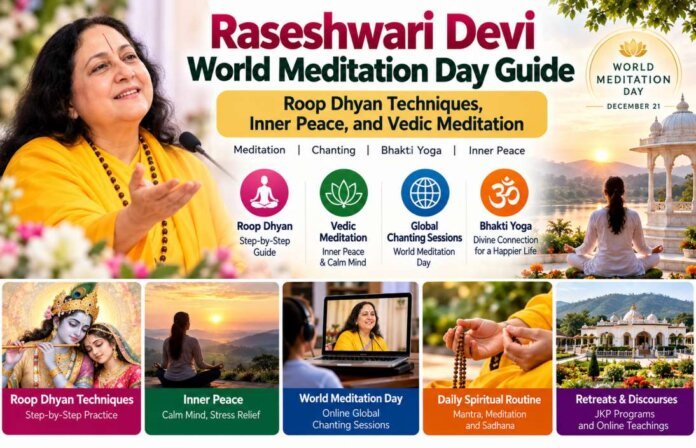
Raseshwari Devi Ji shares spiritual teachings rooted in the Bhakti tradition of Jagadguru Shri Kripalu Ji Maharaj. Her teachings focus on devotion to Shri Krishna and the practice of spiritual discipline. (Official website)
This guide explores Roop Dhyan, daily meditation, mantra chanting, and online spiritual resources. It also explains how to follow World Meditation Day activities and find current events through official channels.
Understanding World Meditation Day Through a Spiritual Lens
The United Nations General Assembly declared December 21 as World Meditation Day through Resolution A/RES/79/137, adopted on December 6, 2024. The day promotes awareness of meditation and its role in health and well-being.
People mark the day in many ways. Some practise silent meditation. Others take part in guided sessions, prayer, yoga, or group chanting.
For followers of Bhakti Yoga, meditation can focus on loving remembrance of God. The aim is to bring the mind back to the Divine with faith and devotion.
The True Purpose of Meditation in Vedic Philosophy
Vedic traditions describe meditation in several ways. Some paths focus on observing the mind. Others place attention on a mantra, divine form, or sacred teaching.
In Bhakti Yoga, devotion is central. A practitioner seeks a deeper bond with God through prayer, chanting, study, service, and remembrance.
The mind may wander during practice. The aim is not to force every thought to disappear. Instead, a person learns to return attention to the chosen focus.
In the tradition followed by Raseshwari Devi Ji, remembrance of Shri Radha Krishna plays a central role. Roop Dhyan uses mental focus on the Divine as part of devotional practice.
You can bring this idea into daily life through a short routine:
- Sit in a quiet place.
- Choose a devotional focus, such as a mantra or divine form.
- Allow thoughts to pass without following each one.
- Return your attention to the chosen focus.
- End with a quiet moment of gratitude or prayer.
Meditation can support calm and focus for many people. It does not replace care from a qualified health professional when anxiety, depression, or other health concerns need treatment.
Global Meditation Initiatives and Online Awakening Sessions
World Meditation Day gives people a shared reason to pause and practise. The United Nations invites individuals, communities, and organisations to mark the day in suitable ways.
Some groups hold online meditation sessions. Others arrange group prayer, talks, mantra chanting, or guided reflection. A virtual session allows people in different places to join the same programme.
For followers of Raseshwari Devi Ji, her official events page is the best place to check for current satsang, shivir, and discourse announcements. Her website also has a Satsang Sangrah YouTube link, which can help readers find recorded teachings.
Her organisation has offered online spiritual programmes in the past. But each event has its own dates and access rules. Check the official listing before planning to attend a live session.
For December 21, 2026: Check the official World Meditation Day page and Raseshwari Devi Ji’s event calendar for confirmed details. Do not assume that every global meditation event is hosted by, or linked to, her organisation.
Masterclass: Roop Dhyan (Divine Form Meditation)
Roop Dhyan is a devotional form of meditation associated with the teachings of Jagadguru Shri Kripalu Ji Maharaj. It centres on bringing the mind towards the divine form of Shri Radha Krishna.
The practice uses loving attention rather than trying to force the mind into silence. A practitioner gently brings attention back to the Divine whenever thoughts pull it away.
What Is Roop Dhyan? The Art of Visualising the Divine
In Roop Dhyan, the practitioner focuses the mind on the divine form with devotion. This can involve recalling a sacred image, reflecting on divine qualities, or following guidance from a spiritual teacher.
The method may suit people who find it hard to sit in silence with no clear focus.
Here is a simple introduction for beginners. It is a general overview, not a substitute for direct guidance from a qualified teacher in this tradition.
Step 1: Choose a quiet place
Find a spot where you can sit without frequent interruption. Keep your posture comfortable and your back upright if that feels natural.
Step 2: Settle your attention
Close your eyes if comfortable, or lower your gaze. Take a few easy breaths and let your body settle.
Step 3: Bring a devotional image to mind
Recall a sacred image of Shri Radha Krishna, or use an image that your teacher recommends. Let the focus remain gentle rather than strained.
Step 4: Bring attention back when it wanders
You may think about work, meals, family, or tomorrow’s tasks. Notice the thought and return your attention to the devotional focus.
Step 5: Include loving remembrance
Reflect on the Divine with faith and sincerity. You can also repeat a suitable devotional name or mantra if this is part of your practice.
Step 6: Finish slowly
After five to ten minutes, sit quietly for a short time. Return to your daily activity at an easy pace.
Beginners can start with a few minutes each day. Longer sessions may come with practice and guidance.
Overcoming Distractions During Meditation
A wandering mind is a common part of meditation. It does not mean that you are failing.
The key is to notice when attention shifts, then return to your practice. Each return gives you another chance to build the habit.
Try these tips:
- Keep sessions short at first. Five minutes can be enough to form a routine.
- Use one clear focus. Choose a mantra, a devotional image, or a guided recording.
- Reduce distractions. Silence alerts and choose a quiet place.
- Practise at a regular time. A routine can make it easier to sit each day.
- Avoid judging every session. Some days feel calm; others feel busy.
If guided meditation helps, use a recording from a source you trust. The official Raseshwari Devi Ji website links to teachings and satsang resources.
Practical Mindfulness and Mental Peace for Daily Life
Meditation does not need to remain a separate activity. A short pause before a meal, a few quiet breaths, or a minute of mantra remembrance can bring attention back to the present.
In Bhakti practice, these moments may become part of daily sadhana. The aim is to keep devotion in mind during ordinary duties, not just during formal prayer.
How to Control a Restless Mind (Manah-Nigrah)
In spiritual practice, Manah-Nigrah refers to disciplining or restraining the mind. This does not mean suppressing every emotion. It means learning not to follow every thought or impulse.
A useful daily method is to pair a simple habit with a spiritual focus.
For example, you could repeat a devotional name at the start of your morning, sit for a few minutes after prayer, or pause for quiet reflection before sleep.
When a strong emotion appears, try this sequence:
- Pause before reacting.
- Notice what you feel without judging yourself.
- Take a few slow, natural breaths.
- Repeat your chosen mantra or bring attention back to your devotional focus.
- Decide what to do after the first rush of emotion passes.
This approach may help you respond with more care. It is not a promise that meditation will remove all negative thoughts or solve every personal problem.
For followers of Bhakti Yoga, regular prayer, satsang, spiritual reading, and service can support devotional discipline. Raseshwari Devi Ji’s official site shares teachings about devotion and the principles of the Sanatan Vedic tradition.
Creating a Sacred Daily Meditation Routine at Home
A steady routine is often easier to maintain than long sessions done only now and then.
Choose a time that suits your day. Many people prefer early morning, before daily tasks begin. Evening practice can suit those who need a quiet pause after work.
A simple routine could look like this:
| Time | Practice | Duration |
|---|---|---|
| Morning | Sit quietly and settle your attention | 2 minutes |
| Morning | Roop Dhyan or guided devotional meditation | 5–10 minutes |
| Morning | Mantra chanting or prayer | 3–5 minutes |
| Evening | Read or listen to a short spiritual teaching | 5–10 minutes |
| Before sleep | Quiet reflection and gratitude | 2 minutes |
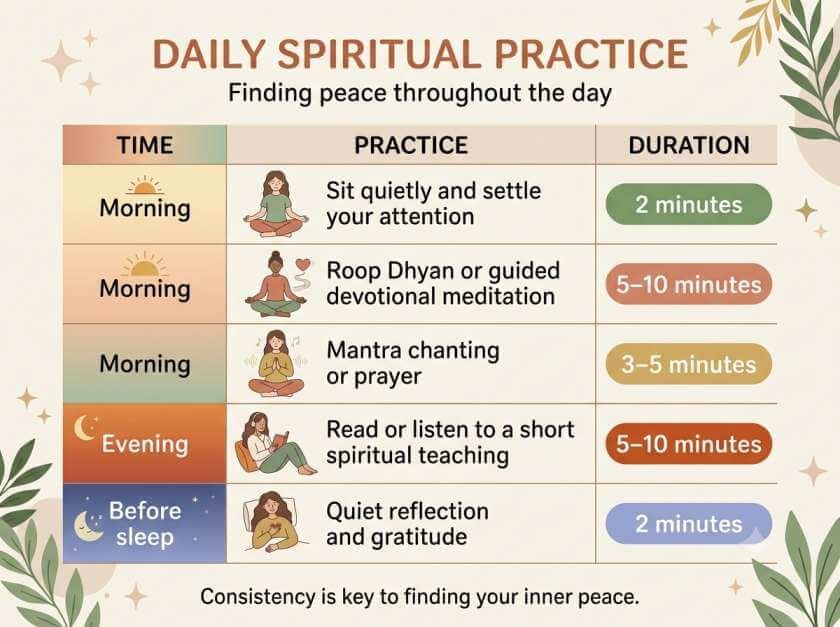
These times are examples, not official instructions from Raseshwari Devi Ji. Adjust them to your needs and follow your teacher’s guidance for any formal practice.
Prepare a clean, comfortable space. You may use a small prayer area, a mat, a cushion, or a devotional image. Keep the setting simple so you can focus on your practice.
If sitting on the floor is uncomfortable, use a chair. There is no need to endure pain to meditate.
Connecting with Upcoming Retreats and Discourses
A spiritual retreat can provide more time for study, prayer, chanting, and group practice. It can also help new learners understand a tradition directly from its teachers.
Raseshwari Devi Ji’s organisation, Braj Gopika Seva Mission, has organised spiritual camps and programmes in India and online. The format depends on the event and the year.
Attending JKP Meditation Camps and Retreats
Searches for JKP Radha Madhav Dham meditation retreats may lead to programmes run by different spiritual organisations. Check the organiser’s name and venue before registering.
The Radha Madhav Dham retreat page lists devotional programmes such as sadhana camps and sankirtan retreats. It is a separate organisation in Texas, USA, so do not assume that its schedules are connected to Raseshwari Devi Ji or Braj Gopika Seva Mission.
For Raseshwari Devi Ji’s own programmes, use her official events page. Read the full notice for dates, venue, age rules, registration, and participation details.
Before attending a camp, check:
- Whether registration is required.
- The start and end dates.
- Whether online participation is offered.
- The daily schedule and any preparation needed.
- The accommodation and meal arrangements for in-person events.
Do not book travel or pay a fee using an old poster. Event details may change.
How to Access Online Teachings and Recorded Sessions
Raseshwari Devi Ji’s website links to Satsang Sangrah on YouTube, along with a library, blogs, and event notices. These are useful starting points for recorded teachings and spiritual study.
To find current resources:
- Open the official website.
- Select the Satsang Sangrah YouTube link, library, or relevant teaching section.
- Search the available recordings by topic.
- Check the description for the teacher, date, and full context.
- Save the official link if you plan to return to the recording.
The official website also lists contact details for questions about programmes:
Phone: +91 8280342310
Email: contactus@bgsm.org
Use the event page or direct contact details to ask whether a World Meditation Day session, live discourse, or online chanting programme is planned for December 21, 2026.
Frequently Asked Questions
When Is World Meditation Day?
The United Nations declared December 21 as World Meditation Day. The General Assembly adopted the resolution on December 6, 2024.
What Is Roop Dhyan Meditation?
Roop Dhyan is a devotional meditation method associated with Jagadguru Shri Kripalu Ji Maharaj’s teachings. It focuses attention on the divine form of Shri Radha Krishna.
Can Beginners Practise Roop Dhyan at Home?
Beginners can start with a short, quiet session using a devotional focus. Those who want to follow the method within a specific tradition should seek instruction from a suitable teacher.
Where Can I Find Raseshwari Devi Ji’s Online Discourses?
Start with the official website, which links to Satsang Sangrah on YouTube and current events. Use the official events page for confirmed live programme details.
Is There a Confirmed World Meditation Day Session by Raseshwari Devi Ji in 2026?
I could not verify a specific session announcement on the official pages reviewed. Check the official events page for updates before December 21, 2026.
Final Thoughts: Make Meditation Part of Daily Life
World Meditation Day is a reminder to make space for quiet, reflection, and inner care. For followers of Vedic Bhakti, meditation may include remembrance of Shri Radha Krishna, mantra chanting, prayer, and Roop Dhyan.
Start with a few minutes each day. Choose a practice that fits your beliefs and seek guidance when you want to learn a specific tradition. Return to it with patience, especially when your mind wanders.
For current teachings, retreats, and online satsang, use Raseshwari Devi Ji’s official website and event listings. That is the best way to find accurate schedules and avoid relying on old announcements.
Meditation is a practice, not a race. A small, steady routine can give you time to pause, reflect, and act with more care during daily life.