



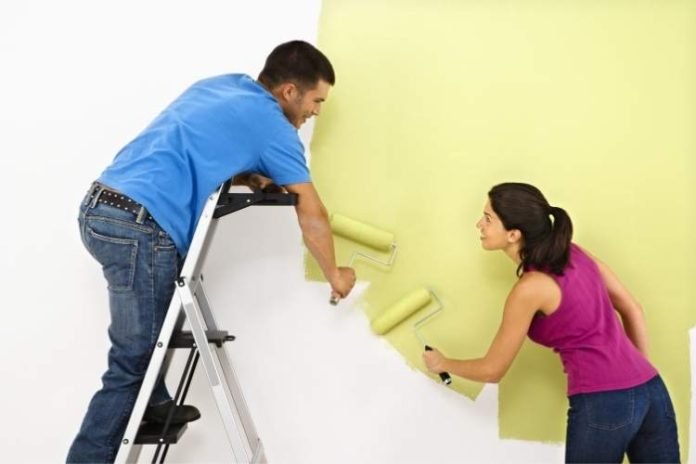
To maintain the rich tone and smooth completion of your home’s interior look doesn’t mean you need to repaint the entire space to fix the holes, breakage, scratches and dents that can, after some time, deface your dividers’ surfaces. By giving a touch-up to your home with paint can help improve its value and also the aesthetics. Before starting up with DIY, try searching for professional painting contractors near me, you can easily find dallaspaints.
By utilizing the appropriate procedure and the correct tone, you can finish up selected spots of your divider paint, and keep your dividers looking immaculate and newly painted.
Step 1: Clean the surface
Before you make fixes, clean the zone with a wipe, gentle cleanser and water. Earth, grime and residue can develop on the divider’s surface, which can influence paint grip when you start finishing it up. Gently wipe the work territory with the lathery wipe and afterward dry it with a perfect towel prior to continuing.
Step 2: Fix the Repairs
Imprints, little openings (nail openings, and so forth) and more profound scratches can be filled in with spackling powder. Utilize a bit of fine-coarseness sandpaper and delicately smooth the surface around the territory to be fixed. This will assist with eliminating any parts or raised bits of the divider. Next, open a compartment of premixed spackling compound and gather up a modest quantity of it with the edge of a clay blade. Utilize barely enough to fill in the opening or break. Put the compound-covered sharp edge of the clay blade at a 45-degree point to the divider and spread the compound over the opening or break in a smooth, feathering movement. Do this until the opening is totally filled in. Scratch away overabundance compound from the divider with your clay blade with the edge at a 90-degree point to the divider. Wipe any leftover overabundance with a soggy material before it sets. It will require a couple of hours for the fix to appropriately set. In the event that the fix is marginally raised from the remainder of the surface, softly sand it again with fine-coarseness sandpaper.
In case you’re dealing with openings that are 2″ or more noteworthy in breadth, you may have to buy or make a divider fix and apply it prior to utilizing joint compound to seal it set up. Learn a few tips before you hire a drywall specialist.
Step 3: Turn to Prime
You should now take action in the damaged and broken areas for ideal paint attachment and shading mixing. Without preliminary, the cleaned up spot will stand apart from the remainder of the painted surface. Pick an excellent interior latex primer. Utilize a little or medium-sized paintbrush (contingent upon the size of the fixed area) to apply a layer of preliminary over the spot. Attempt to keep the size of the prepared zone bound to the components of the maintenance for best outcomes. Let the preliminary dry totally, as per the manufacturer’s guidance.
Step 4: Select the same paint
It can be hard to coordinate the shading precisely if the final detail paint isn’t from the equivalent can. So at whatever point conceivable, consistently store extra paint with the goal that you can utilize it for final details when expected to get the best outcomes. Apply a similar paint used to paint the divider its present tone. On the off chance that you don’t have any of the first paint left, you can attempt to coordinate it with a similar brand, shading and finish.
Utilize the very implement that was utilized to paint the keep going layer of paint on the divider that you’re finishing up. On the off chance that you utilized a roller, utilize a roller once more (a little estimated roller offers better control). In the event that you utilized a brush, utilize a brush once more. This will help recreate the surface. Use as meagre paint as could be expected under the circumstances and apply limited quantities all at once. When utilizing a brush, “quill” the edges, starting at within the final detail, moving out toward the edges. Feathering is where you expand your brush strokes marginally past the fixed zone to mix into the encompassing paint for a smooth change.
Supportive Tips
For final detailing of little openings or imprints, you can utilize a calculated froth brush to softly touch paint on the spot.
Continuously observe the paint finish (level, eggshell, semi-shine, sparkle, and so on) The smallest distinction in sheens can make your final detail stick out. Sparkle completes are particularly difficult to clean up.
Decreasing paint by 10 to 15% with a paint reducer can regularly help the final detail paint mix in. Utilize a paint reducer suggested by the paint maker.
In the event that the consequences of your final detail aren’t fulfilling, repainting the room is consistently an alternative. See Paint a Room for painting tips. At times, you may have the option to coordinate the room tone and paint by painting only one divider from corner to corner. The unaided eye undoubtedly won’t have the option to differentiate between dividers after the new paint has dried and matured. High-traffic regions will require many final details, so it very well might be a smart thought to repaint them.
Step 5: Check Touch Ups in the wake of Drying
Allow the paint to dry totally for the time suggested by the paint producer. At that point verify how noticeable the final details are by taking a gander at the divider at a point. Check its appearance in both regular and fake light at various times. On the off chance that you think too basically, you may consistently see the finished up spots, however somebody visiting your home will most likely be unable to. So be liberal in your evaluation.