



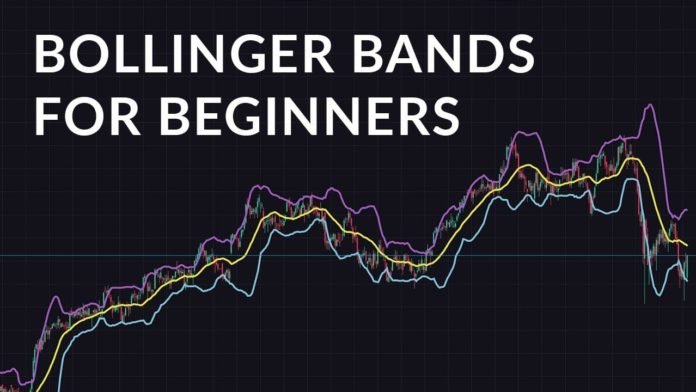
You may have heard of Bollinger Bands. These are nothing but mathematical patterns that show exactly where the market will go before it happens. These can be used to trade for or stock but they can also be found in more exotic areas such as futures and options. The beauty of these patterns is that you can trade them with the simple using a software program that does all the heavy lifting for you. I am sure you can see how big an impact this would make on your trading strategy if you could use Bollinger bands to guide your trades…
Think of Bollinger Bands like the rice crackers that sometimes appear in supermarkets. They look just like a regular cracker until you bite into it. The thing that stands out is that instead of being a regular cracker, it now contains a little gadget that looks just like a piece of rice. This piece of rice tells you exactly when the trend to which it corresponds is about to break out. Once you have heard this signal, it’s time to act on it and sell or buy the security that bears this signal.
Traders have been using bollinger bands since the late 1970’s to spot trend lines on currency trading charts. If you notice any trend lines on a chart, Bollinger bands can provide you with the exact indication as to what will happen next. For example, if a trend line has been established on a three-year chart, and the current price is close to the trend line, this indicates that it is a strong possibility that the current price will break out. Similarly, if the current price is far from the trend line, this indicates that the current price may not be strong enough to break out. It is important to remember though that a Bollinger band is not a prediction, and it is far from accurate at telling you what will happen next.
But what exactly is a Bollinger band? These are actually long thin lines on a chart that identify breakouts. A breakout is where the price quickly crosses one of the high-water marks and starts to move up. While this can often indicate a strong move in the market, it is also a sign that the trend may be changing direction. A trend that goes on for more than three months is considered a long term trend, whereas a short-term trend has less risk and is considered a swing.
How do traders use Bollinger bands to know if a trend is entering? When a price moves up and a lower band (barking) appears on the chart, this indicates that the price is likely to continue on the new trend. The lower band is indicating that there is a plateau or resistance level. This means that the price may have trouble staying above the lower band. When the price breaks out of the lower band, it is an indication that the price may continue on the upward move, which can result in a breakout.
Some traders prefer to use Bollinger bands to indicate breakouts even if they don’t predict a reversal in the trend. Since the price moves rapidly between the high and low in a trading session, it is very difficult to draw strong action from the trend. However, many traders still want to be aware of breakouts since it gives them time to prepare for them. It gives the trader an exit (buy) signal that will allow them to buy or sell before the price moves on the new trend. Since a Bollinger band only has horizontal lines, a breakout can either appear flat or sharply rising (trend reversal).
In addition to breakouts, the lower bands can also indicate retracements. The price can slip down in one band and then quickly move back up in another. This can indicate that a price has made a big reversal and is likely headed for the moving averages. Traders who can recognize these patterns quickly and act quickly before the price moves too far away will often make more money than those who wait around.
It’s important to remember that the lower band is not a reliable indicator of support or resistance. Support and resistance are much more reliable indicators and are usually displayed on additional trading charts. It’s best to avoid trading with lower band patterns because they are unreliable. Since Bollinger bands can only give traders an idea of where a reversal might occur, they are not useful as indicators of trend direction.