



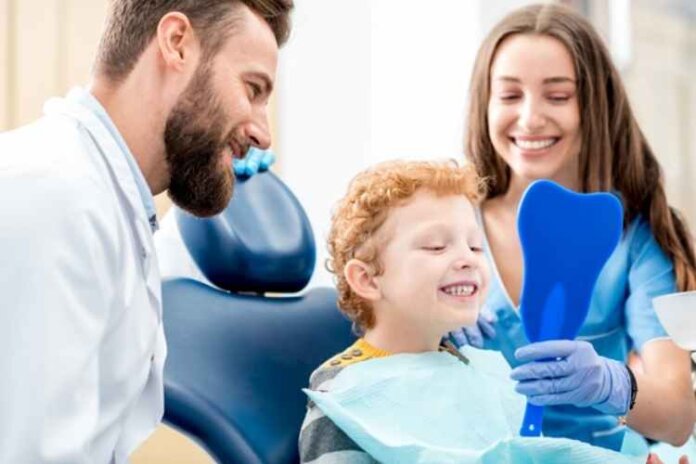
Should you see a dentist or an orthodontist?
While they both specialize in oral healthcare, orthodontists pursue additional education. This helps them gain the skills necessary to diagnose and treat misalignments of the teeth and jaws.
Now, if you’re looking for orthodontic specialists who offer family orthodontics services, it helps to understand how they can help you and your family members.
That said, let’s discuss what issues orthodontics can help correct. We’ll also talk about how preventive orthodontics benefits children. Plus, we’ll discuss some tips on choosing a family orthodontist.
First Things First: What Is Orthodontics?
The term “orthodontics” comes from two Greek words: “orthos,” which means “correct” or “straight,” and “dontics,” meaning “related to teeth.”
Orthodontists address dental issues such as crowded teeth, overbites, and crossbites. They also treat open bites, increased and reversed overjet, and spacing problems.
Beyond improving smiles, orthodontics has functional benefits. For example, once crooked teeth are fixed, the patient can enjoy a lower risk of dental caries.
That’s because food particles will no longer collect between the teeth. Of course, the patient will still need to practice good dental hygiene habits, including brushing and flossing.
Some Benefits of Preventive Orthodontics
Also known as Phase One or phase 1 orthodontics, preventive orthodontic treatment is for children (7 to 9 years old). If you have kids around those ages, it would be good for them to see an orthodontist asap, especially if certain signs are present.
These include early or late loss of baby teeth, chewing or biting difficulties, mouth breathing, and thumb sucking. If your children also have protruding front teeth, speech impediments, or crowded teeth, an orthodontist can help assess if they need early orthodontics.
To learn about phase 1 treatment, be sure to get a referral from your dentist or book an appointment with a local orthodontist. Remember, early orthodontic treatment can reduce the chance of extractions in the future. Correcting bite problems and spacing issues while they’re young is more manageable than when their permanent teeth have come in.
A Few More Notes on Phase 1 Treatment
Let’s say your child needs Phase One treatment. After taking an impression of your kid’s upper arch, your orthodontist may recommend orthodontic braces. Or they may suggest a palatal expander or custom aligners (e.g., Invisalign First).
Early treatment usually takes half a year, but orthodontists sometimes recommend the dental appliance to be worn for a year. After the treatment period, there will be a resting stage. Then the patient will begin phase 2 (around age 11 to 13).
Phase 2 involves braces to ensure the correct alignment of permanent teeth.
Tips for Choosing a Family Orthodontics Specialist
It’s not enough that you choose a family-friendly orthodontics clinic. The best orthodontist is board-certified and a good communicator (especially with kids). They will also be available in dental emergencies.
The good news is you don’t need to look far to find an excellent orthodontist in your area. Ask for recommendations from friends, or you can search online to check customer reviews.
Ready to See a Family Orthodontist?
Now that you know more about family orthodontics, do you already have a list of clinics in your area?
If you need more information before setting appointments, don’t worry. Check out our other posts for tips and advice about choosing a dentist.