



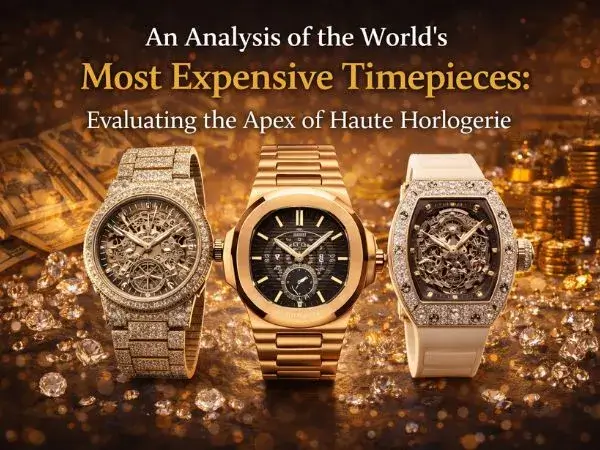
The contemporary horological market exhibits a profound dichotomy, ranging from mass-produced, utilitarian digital devices to ultra-luxury mechanical creations that command astronomical valuations. While standard consumer purchasing decisions involve pragmatic considerations of cost, durability, and functionality, the upper echelon of this market operates on entirely different economic principles. Within this premier sector, exclusivity, historical provenance, and the integration of highly precious materials elevate functional instruments to the status of speculative assets and fine art.
Market Dynamics and Artificial Scarcity
The retail market for premium mechanical timepieces is frequently characterized by the strategic implementation of artificial scarcity. Manufacturers deliberately restrict the production volume of highly anticipated models, resulting in rapid inventory depletion and the subsequent proliferation of a lucrative secondary market. This phenomenon often renders standard acquisition processes ineffective, as extensive waiting lists and required purchasing histories marginalize average consumers. Consequently, acquiring premium horological pieces has transitioned from a straightforward retail transaction into a highly exclusive and heavily gated endeavor.
also read : – Akatsuki Rings Meaning- What Do The Akatsuki Rings Mean?
The Commodification of Haute Horlogerie
Beyond the secondary retail market lies the domain of ultra-luxury collectibles, where timepieces transcend their fundamental utilitarian purpose to become static displays of extreme wealth. In this tier, items are frequently acquired by high-net-worth individuals and stored in highly secure, climate-controlled environments, rarely utilized for their intended mechanical function. This trend highlights a paradigm where symbolic value and investment potential entirely supersede the practical application of the instrument. The transformation of functional machinery into dormant financial assets significantly alters the traditional ethos of watchmaking.
Methodology for Evaluating Peak Valuations
To comprehend the absolute apex of this market, an examination of the most expensive watch on the planet alongside other top-tier pieces provides essential context. The following compilation details the ten highest-valued horological items globally. This analysis illustrates a broad spectrum of valuation drivers, spanning from historical significance and mechanical complexity to bespoke haute couture creations incorporating exceptionally rare geological materials.
10. Patek Philippe Stainless Steel Ref. 1518
Estimated Valuation: $11 Million (Approximately 90 Crore Rupees)
The valuation of certain timepieces is frequently tied to extreme scarcity rather than intrinsic material value. This specific model, constructed from stainless steel rather than precious metals, derives its astronomical price from its historical rarity. Only four such units were manufactured by Patek Philippe in 1941. Its multi-million-dollar acquisition at auction reflects its status as a paramount artifact of horological history, demonstrating that limited production volume can drive market value as effectively as precious gemstones.
also read : – Latest Trends In The Fashion And Beauty Industry
9. Paul Newman’s Rolex Daytona
Estimated Valuation: $17 Million (Approximately 140 Crore Rupees)
This particular timepiece demonstrates the substantial economic impact of celebrity provenance. Originally owned and extensively worn by the prominent actor and motorsport enthusiast Paul Newman, the watch features a personalized engraving from his spouse. The significant visible wear on the piece serves to authenticate its extensive usage and historical connection. Its extraordinary valuation is largely predicated on its unique historical narrative and cultural capital within the watch-collecting community.
8. Jacob & Co. Billionaire Watch
Estimated Valuation: $18 Million (Approximately 150 Crore Rupees)
Representing a significant departure from understated historical pieces, this creation by Jacob & Co. integrates high-end jewelry design with mechanical horology. The structural framework is heavily embellished with 260 carats of substantial, emerald-cut diamonds. The valuation of this item is derived almost entirely from the clarity, cut, and sheer volume of the precious gemstones utilized in its construction, functioning primarily as a conspicuous display of wealth rather than a discreet timekeeping instrument.
7. Patek Philippe Henry Graves Supercomplication
Estimated Valuation: $24 Million (Approximately 200 Crore Rupees)
This item is a highly complex pocket watch, commissioned during the early 20th century as part of a competitive endeavor to construct the world’s most intricate timepiece. The manufacturing process required eight years of intensive labor and engineering. The watch features twenty-four distinct complications, including a celestial chart mapping the night sky over New York City, and a minute repeater. Its valuation reflects the unparalleled mechanical ingenuity and artisanal craftsmanship required for its creation.
6. Chopard 201-Carat Watch
Estimated Valuation: $25 Million (Approximately 210 Crore Rupees)
This creation by Chopard blurs the distinction between a functional timepiece and high jewelry. The exterior is entirely encrusted with 874 diamonds, featuring prominent pink, blue, and white diamonds at its center. The functional watch dial is deliberately obscured by a spring-loaded mechanism that retracts the central stones. The piece prioritizes aesthetic opulence and gemological rarity over legibility and practical timekeeping.
5. Jaeger-LeCoultre Joaillerie 101 Manchette
Estimated Valuation: $26 Million (Approximately 215 Crore Rupees)
Presented as a gift to Queen Elizabeth II, this piece resembles a sophisticated silver bracelet rather than a traditional watch. It is notable for containing the Calibre 101, recognized as one of the smallest mechanical movements globally. The integration of this microscopic engineering feat with extensive diamond embellishments results in a highly refined, culturally significant artifact. Its valuation is augmented by both its engineering pedigree and its association with international royalty.
4. Breguet Grande Complication Marie-Antoinette
Estimated Valuation: $30 Million (Approximately 250 Crore Rupees)
This pocket watch possesses a profound historical provenance, originally commissioned for the French Queen Marie Antoinette prior to the French Revolution. The design mandate required the inclusion of every horological complication known at the time. The manufacturing process spanned four decades, concluding long after the intended recipient’s passing. Crafted extensively from gold and featuring a complex internal architecture, its value is intrinsically linked to its dramatic historical narrative and technical ambition.
3. Patek Philippe Grandmaster Chime
Estimated Valuation: $31 Million (Approximately 260 Crore Rupees)
Created to commemorate the 175th anniversary of Patek Philippe, the Grandmaster Chime is recognized as the most complex wristwatch ever produced by the manufacturer. Encased in solid gold, the piece features a reversible dual-dial mechanism and required an estimated 100,000 hours of development and assembly. The inclusion of highly sophisticated acoustic complications, such as a grande sonnerie, justifies its position as a masterpiece of modern mechanical engineering.
2. Graff Diamonds The Fascination
Estimated Valuation: $40 Million (Approximately 330 Crore Rupees)
Constructed by the prominent jewelry house Graff, this piece is a testament to extreme material opulence. The watch incorporates 152 carats of white diamonds, centered around a significant pear-shaped diamond. The design features a modular element, allowing the central diamond to be detached and worn as a separate ring. This dual functionality underscores its primary classification as transformable high jewelry.
1. Graff Diamonds Hallucination
Estimated Valuation: $55 Million (Approximately 450 Crore Rupees)
Representing the most expensive watch on the planet, the Graff Diamonds Hallucination is valued at an unprecedented $55 million. The piece is characterized by an exterior completely covered in 110 carats of exceptionally rare, multi-colored diamonds. The functional dial is diminutive and secondary to the overwhelming presence of the gemstones. The immense valuation is driven entirely by the geological rarity of the colored diamonds and the thousands of hours of specialized labor required for their precise setting.
The Paradox of Mechanical Horology in the Digital Age
An objective analysis of the ultra-luxury horological market reveals an inherent paradox. Contemporary digital devices and satellite-synchronized timekeepers provide absolute chronological accuracy. Conversely, highly valued mechanical watches rely on traditional spring-and-gear mechanisms that are inherently subject to minor functional deviations. Consequently, the astronomical premiums paid for these items are not reflective of their timekeeping precision, but rather their status as artisanal masterpieces, cultural artifacts, and symbols of extreme affluence.
Security and Logistical Implications of Ultra-Luxury Assets
The acquisition and ownership of assets valued in the tens of millions of dollars necessitate rigorous, institutional-grade security protocols. Items of this magnitude are typically transported by armed personnel and exhibited within bullet-resistant, climate-controlled enclosures. Furthermore, the necessity for comprehensive, specialized insurance policies underscores their classification as high-risk alternative investments rather than functional apparel. The logistical framework required to possess these items emphasizes the extraordinary nature of the ultra-luxury market.
Intrinsic versus Sentimental Valuation
While the market dictates the monetary value of rare commodities, the concept of valuation remains subjective. Standard, mass-produced timepieces frequently accumulate significant sentimental value through long-term personal usage and generational transfer. Such items, bearing the physical evidence of daily wear, possess an intrinsic personal narrative that cannot be quantified or replicated by extreme capital expenditure.
Conclusion
The evolution of timekeeping instruments from basic utilitarian tools to multi-million-dollar luxury assets illustrates a complex intersection of engineering, history, and profound wealth concentration. While the vast majority of consumers navigate a market defined by practical utility, the ultra-luxury sector operates on paradigms of extreme exclusivity and material opulence. These items, though inaccessible to the general public, serve as fascinating indicators of global wealth distribution and the upper limits of luxury market economics.