


Did you know that 4 million people under the age of eighteen in the U.S. have braces? Whether you’re a parent of a child who’s about to start their straight teeth journey or you’re thinking about getting braces on your own, you’re in good company.
There are many different types of braces to choose from in 2022. If you don’t want a mouth full of metal, you have options.
Read on to learn about four different types of braces and the pros and cons of each.
1. Traditional Metal Braces
When most people think of braces, these are what come to mind. Traditional metal braces are a tried and true orthodontic treatment.
With traditional metal braces, the orthodontist places a metal bracket on each tooth. They then run a wire around the brackets. During each appointment, the orthodontist will adjust the wires to slowly move the patient’s teeth into place.
Pros of Metal Braces
Metal braces are the most common option, and for good reason. Traditional metal (and sometimes ceramic) braces are the only type that allows you to get same day braces. This means that you can get braces put on your teeth during your consultation appointment.
Metal braces tend to work quickly in the majority of orthodontic cases. They’re also more affordable than the other options.
Traditional metal braces are great for children because they are difficult to break or remove. Children never have to worry about “losing” their braces.
Cons of Metal Braces
Metal braces aren’t perfect. They are the most uncomfortable option because the metal brackets and wires can scrape the patient’s gums. You can get orthodontic wax to prevent this, but there will always be discomfort after each appointment.
Metal braces are the most visibly obvious choice. While braces are more subtle than they were in decades passed, they’re still noticeable in photos and from a distance. This might make some people feel self-conscious.
When you wear metal braces, you have to modify your diet. You won’t be eating any super hard or sticky foods until the end of your treatment plan.
2. Ceramic Braces
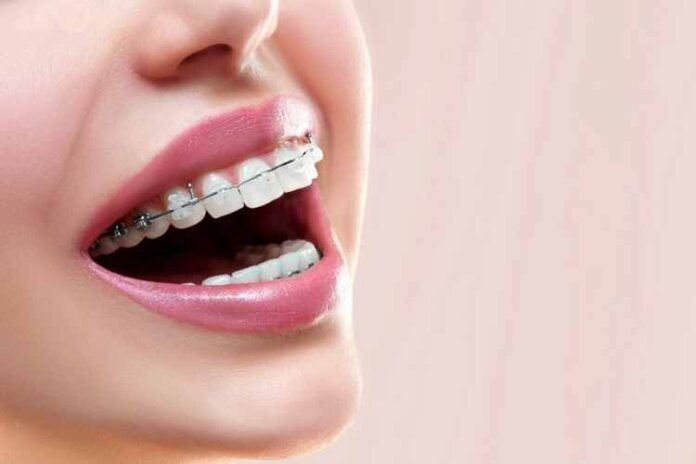
Ceramic braces are sometimes referred to as “invisible braces,” but they’re not truly invisible. They’re almost identical to traditional metal braces, but with one large difference.
Instead of metal brackets, the orthodontist will place ceramic tooth-colored brackets. They blend in with the patient’s teeth. They also have to use a metal wire (which will still be visible) but some orthodontists will coat the wire in a white cover to make it less obvious.
Pros of Ceramic Braces
The benefits of ceramic braces are similar to the benefits of traditional braces. They work well on a wide variety of orthodontic problems, and they’re more affordable than other more unique types of braces.
Their subtlety puts them a notch above normal braces. While they’re still quite visible, most people won’t notice them in photos or from a distance.
Cons of Ceramic Braces
While ceramic braces aren’t as uncomfortable as metal braces, they can still scrape up the patient’s gums. Again, orthodontic wax will fix this problem.
Ceramic braces are not as “invisible” as many people expect, so patients may be unpleasantly surprised if they don’t do their research ahead of time. Like metal braces, ceramic braces will limit your diet.
3. Lingual Braces
Lingual braces are one of the lesser-known orthodontic options.
Like traditional metal braces, lingual braces include metal brackets and wires. Unlike traditional metal braces, however, they go behind your teeth (on the lingual, or tongue, side) so they’re invisible from the front.
Not all orthodontists will offer lingual braces, so if this is something that interests you, you should ask during your initial consultation.
Pros of Lingual Braces
The top benefit of lingual braces is that they’re as close to invisible as you can get as long as no one is looking too closely into your mouth. If you’re self-conscious, they’re a great option.
Lingual braces can also work more quickly than traditional braces because the wires are contoured to each patient’s mouth instead of in a traditional horseshoe shape (though the reverse may also be true depending on your case).
Cons of Lingual Braces
Unfortunately, lingual braces are more expensive than traditional metal braces by a large margin. Because so few orthodontists offer them, you’re going to have to pay a premium.
Lingual braces can give you a lisp. They’re also more uncomfortable than traditional metal braces because of the constant contact between your tongue and the brackets.
4. Clear Aligners
Clear aligners have boomed in popularity. The most common brand is Invisalign, but plenty of competitors have popped up over the past few years. If you choose to get clear aligners, make sure that you visit an orthodontist instead of getting mail-order ones. It’s far safer.
When you get Invisalign, your orthodontist will place tooth-colored attachments on teeth that require the most movement. Some people don’t get attachments, but this is uncommon.
They’ll give you a series of clear plastic trays that you’ll swap out every week (or every other week depending on your treatment plan). Those trays will align your teeth over time.
Pros of Clear Aligners
Clear aligners are the second most subtle option next to lingual braces, and they’re also far more accessible. Most orthodontists and some dentists offer clear aligners.
You don’t have to change your diet when you get aligners. You can eat anything you want as long as you remove the trays and brush your teeth when you’re done.
Many people find clear aligners far more comfortable than metal braces.
Cons of Clear Aligners
When you get clear aligners, you have to wait up to six weeks after your consultation. The orthodontist will send in scans of your mouth to the aligner company. They then have to manufacture the aligners and send them back to you.
For people who are anxious to start right away, this might be a problem.
You also have to be fairly responsible to wear aligners. You have to keep them in for 20-22 hours per day. If you lose one, you can set back your treatment significantly.
Which of the Different Types of Braces Is Right for You?
All of the different types of braces are effective at fixing most orthodontic issues. Talk to your local orthodontist about what type would be best for your situation.
For more helpful articles about the top trending topics in health and more, visit the rest of our site.