



The question when will the earth end refuses to disappear. It shows up during wars, pandemics, climate disasters, and even quiet years when nothing dramatic seems to happen. People ask it with fear. Others ask it with curiosity. Some ask it searching for signs hidden in religion or ancient texts. A few ask it expecting a date, written clearly, like an appointment on a calendar.
I’ve noticed something important about this question. Most people aren’t asking about rocks and space. They’re asking whether life, meaning, and stability have an expiration date. Science answers it one way. Religion answers it another. Culture fills the gaps with speculation.
This blog walks through all of it. Not predictions. Not panic. Just what we actually know about when will the earth end in which year, what science says, what religious traditions say, what climate change changes, and why no single date survives scrutiny.
What People Mean When They Ask When Will the Earth End
The word “end” means different things depending on who asks it.
Some mean:
- The planet physically destroyed
- Life wiped out
- Human civilization collapsing
- A spiritual transformation
These are not the same event. Treating them as one creates confusion.
The Earth can exist without humans. Humans cannot exist without Earth. That difference matters.
also read : – Barolo Wineries : Where Tradition, Time, and Nebbiolo Shape Italy’s Most Serious Wine
When Will the Earth End According to Science
From a scientific view, Earth does not “end” suddenly. It changes over enormous spans of time. The planet formed about 4.5 billion years ago. It has survived asteroid impacts, ice ages, volcanic eras, and mass extinctions.
Science looks at processes, not prophecies.
When Will the Earth End According to NASA
The keyword when will the earth end according to NASA often gets misunderstood. NASA does not publish an end-of-Earth date. What it does study is stellar evolution.
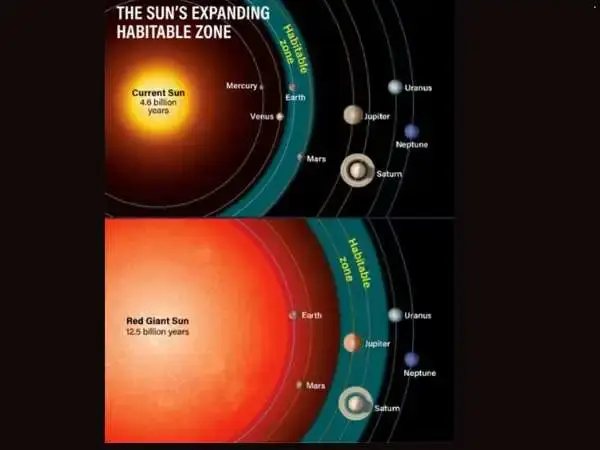
The Sun will not burn forever. In roughly 5 billion years, it will expand into a red giant. When that happens, Earth will become uninhabitable long before it is physically destroyed.
That timeline dwarfs human history.
So if “end” means the end of Earth as a life-supporting planet, science points to billions of years, not decades.
Will the Sun Destroy the Earth
Eventually, yes. Not soon.
As the Sun ages:
- It grows brighter
- Oceans evaporate
- Surface temperatures rise
Life fades gradually, not explosively. Earth becomes sterile long before the Sun swallows it.
This is not an extinction event. It is a slow fade across geological time.
also read : – Wabi and Sabi: Meaning, Style, Fashion, Symbols, and How People Live It Today
When Will the Earth End in Which Year
People want a year. Science does not give one.
No credible scientific model predicts Earth’s destruction in any specific year humans care about. Predictions operate in ranges spanning millions or billions of years.
Any source claiming an exact year lacks evidence.
When Will the Earth End Date: Why No Date Exists
Dates comfort the mind. They give chaos a boundary. Reality doesn’t cooperate.
Asteroids, solar changes, climate systems, and tectonics all involve probabilities. None align to a clean date.
That’s why serious scientists avoid calendars when discussing planetary futures.
When Will the Earth End in 2025
This question spikes every year with a new date. When will the earth end in 2025 appears often due to:
- Viral predictions
- Misread scientific studies
- Social media fear cycles
There is no scientific or credible religious source predicting Earth’s end in 2025.
No asteroid impact. No solar collapse. No planetary instability.
2025 is another normal year on a cosmic scale.
Why End-of-World Dates Keep Failing
Predicted dates fail for the same reason every time.
They:
- Misuse data
- Ignore uncertainty
- Appeal to fear
History records hundreds of failed end-of-world predictions. None survived reality.
also read : – Who Invented Parachute Balloons, How the Idea Took Shape, and Why It Changed Flight Forever
When Will the Earth End from Climate Change
This question needs careful framing.
When will the earth end from climate change assumes total planetary destruction. Climate change does not destroy Earth. It reshapes living conditions.
Climate change threatens:
- Human systems
- Coastal regions
- Food security
- Biodiversity
Earth itself continues. Human civilization faces disruption.
That distinction matters.
Can Climate Change End Human Civilization
Climate change can destabilize societies.
Rising temperatures increase:
- Extreme weather
- Droughts
- Floods
- Migration pressure
Civilizations collapse when systems fail. That has happened before in history.
This does not equal Earth ending. It equals a difficult chapter.
Why Climate Change Feels Apocalyptic
Climate change moves fast on a human timeline.
People experience:
- Heat records
- Fires
- Floods
These feel sudden and personal. Geological change usually feels distant. Climate change doesn’t.
That emotional proximity fuels end-of-world language.
When Will the Earth End According to the Bible
The phrase when will the earth end according to bible leads to misinterpretation.
The Bible does not give a date. In fact, many passages state that no one knows the time. Biblical “end times” focus on spiritual transformation rather than planetary destruction.
The Earth is not described as exploding or vanishing. The emphasis sits on moral judgment and renewal.
Literal calendars miss the point.
also read : – WSP Mean, What It Signals in Messages, and How the Meaning Changes by Context
Why Biblical End Times Are Often Misread
Modern readers project modern fears onto ancient texts.
Apocalyptic language uses symbols:
- Fire
- Darkness
- Judgment
These communicate meaning, not astronomy.
Reading them as physical forecasts creates confusion.
When Will the Earth End According to Hinduism
The keyword when will the earth end according to hinduism leads into cyclical time.
Hindu cosmology describes cycles:
- Creation
- Preservation
- Dissolution
These cycles span billions of years. Destruction is temporary. Creation follows again.
There is no permanent end. Only transition.
This view aligns closely with modern cosmology’s long timelines.
The Concept of Yugas and Earth’s Fate
Hindu texts describe Yugas, or ages. Each declines in moral order. The end of a Yuga does not destroy Earth. It resets balance.
Earth remains part of a continuing cosmic rhythm.
When Will the Earth End According to Bhavishya Malika
The phrase when will the earth end according to bhavishya malika refers to an ancient Odia text attributed to Achyutananda Das.
Interpretations vary widely. Many claims circulating online exaggerate or misquote verses. Scholars disagree on literal meanings.
No verified passage gives a clear end-of-Earth date.
Most references speak of social upheaval, not planetary destruction.
Why Prophetic Texts Get Reinterpreted
Every generation reads prophecy through its own crisis.
Wars, pandemics, and disasters make predictions feel urgent. Later generations reinterpret them again.
This pattern repeats across cultures.
Asteroids and the Fear of Sudden End
Asteroids remain one of the few sudden extinction risks.
Large impacts have happened before. Dinosaurs prove that.
Current monitoring tracks near-Earth objects. No known asteroid threatens Earth in the foreseeable future.
Surveillance improves every year.
Supervolcanoes and Earth’s Stability
Volcanoes disrupt climate temporarily.
Even the largest eruptions do not destroy the planet. They cause hardship, not annihilation.
Earth has endured far worse than modern eruptions.
Could Nuclear War End the Earth
Nuclear war threatens humanity, not Earth.
Radiation fades. Life persists. Earth continues.
Human survival becomes uncertain. Planetary survival does not.
also read : – How Old Is the USA? A Simple Breakdown of America’s Real Age
Why Humans Confuse Civilization Collapse with Earth’s End
Human experience sets the scale.
If systems fail, people describe it as “the end.” In reality, Earth outlasts civilizations routinely.
Civilizations are fragile. Planets are resilient.
Why the Earth Has Survived So Much Already
Earth survived:
- Asteroid impacts
- Ice ages
- Massive volcanism
- Oxygen-poisoning events
Life adapted each time. Different life. Not extinction forever.
This history matters.
When Will the Earth End According to Science vs Belief
Science speaks in probabilities and timescales. Belief speaks in meaning and purpose.
They answer different questions.
Science asks how matter behaves. Belief asks why existence matters.
Confusing those leads to frustration.
Why People Need an End Date
End dates offer:
- Control
- Narrative closure
- Emotional clarity
Reality offers uncertainty.
Humans struggle with open-ended futures.
What Will End First: Earth or Humanity
Humanity ends first.
Earth continues without us.
That truth feels uncomfortable.
also read : – Tengen Uzui Wives: Quick Facts You Need to Know
Should We Worry About the Earth Ending
Worry helps nothing. Responsibility helps everything.
The focus belongs on:
- Reducing harm
- Improving resilience
- Protecting life
Earth does not need saving from ending. Humanity needs saving from itself.
FAQs
When will the earth end in which year
No known year exists based on science or verified texts.
When will the earth end according to NASA
NASA predicts Earth becomes uninhabitable in about 5 billion years.
When will the earth end in 2025
There is no credible evidence supporting this claim.
When will the earth end from climate change
Climate change threatens human systems, not Earth itself.
When will the earth end according to religion
Most traditions describe transformation, not planetary destruction.
Final Words
The question when will the earth end sounds simple. It isn’t. Earth does not end the way stories end. It changes. Life changes. Civilizations rise and fall. The planet keeps moving through space, indifferent to fear, prophecy, and headlines. The real question isn’t when Earth ends. It’s how humans choose to live on it while they can.